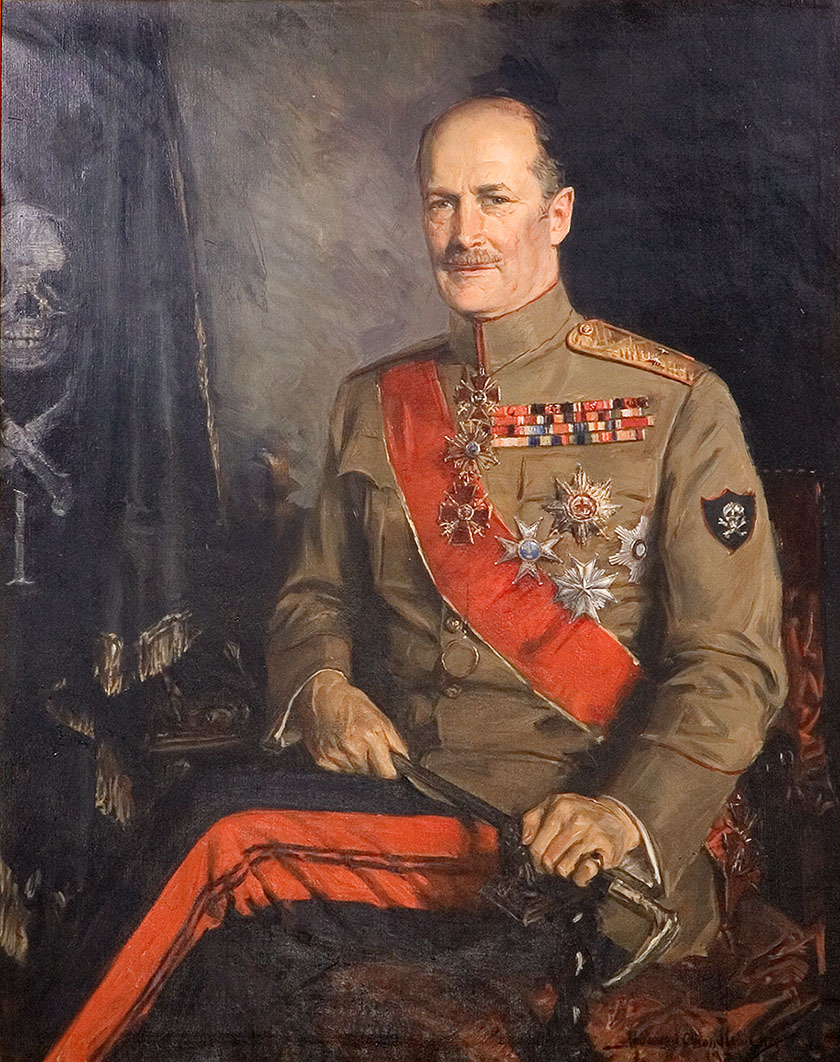
THORD Hallström was raised in Sweden on Viking values: small wonder then that he was destined for the path of the warrior.
Thord’s father, August Reinhold Hallström – an elementary school teacher, cross-country ski champion and renowned hunter – took his three sons on long hikes; encouraged them to play among the graves of Viking chiefs on the idyllic island of Björkö, twelve miles west of Stockholm; and sang to them of Viking legends in his fine voice.
‘He could somehow make the stones, the ground, the trees, and even the air itself vibrate in harmony with the memory of those ancient warriors,’ Thord wrote of his father with a lyricism that surfaces throughout this well-documented account of his life, including his first-hand experience of many wars and armed conflicts.
August Reinhold also taught his son to shoot and ride horses at an early age. Small wonder then that he took to the path of the warrior. Small wonder also that he went to sea as a teenager hungry for adventure and found himself bound for Cape Town in August 1895 as crew member aboard the Swedish barque Fredrik av Nyhamn. His adventure soon took a turn for the worse: Thord was flogged within an inch of his life by his enraged, drunken skipper for a blunder committed during a hurricane by the latter’s son. Disenchanted with seafaring, Thord jumped ship in Cape Town, and his life as a warrior began in earnest.
He fought for the British in the Anglo-Boer War and the Second Zulu War, the rebels in the Mexican Revolution, the Allies in the First World War, and finally for the White Russian Army against the Red Army in the Russian Civil War, rising to the rank of major-general and earning multiple awards for bravery in action.
Thord reaffirmed his commitment to Viking values throughout his life. The ardours of military action against the Boers and the Zulus did nothing to quell his commitment: ‘The Viking blood is always there and fight I must, whatever the cost,’ he said in 1906 to account for his continued quest for armed conflict. Six years later Thord alluded to a darker aspect to this commitment in a letter to his father written from Parit, Perak, where he was employed as plantation manager:
‘Gunnar [Thord’s brother] and the others used to laugh at me when I told them that I could barely sleep at all on Björkö. The clash of arms, orders, and screams of all possible kinds – murder and fire! I saw people but I could not describe them well. They came to me in my dreams and sometimes I lay awake for hours afterwards in a strange mood, which I cannot describe either. Maybe it was a kind of fear, although I did not know it. Sometimes I felt as if I had been a “medium” in transformation, in transmutation. As Mother knows, these things and much darker things have been behind my quest – and maybe even the basis of all my wandering and my love of war. Mother may not be aware that I am known all over Africa and East Asia as the “Viking”, while in South Africa, together with my two friends Watt and Midgeley, I was better known as one of “The Three Musketeers”. I sometimes believe that I was born a thousand years after my time – the medieval age, after all, had its good points.’
Something else emerges from Thord’s warrior narrative: respect for ‘the enemy’, whether Boer, Zulu or Bolshevik. This respect prevails despite his commitment to defeat the enemy at all cost. Wherever he could, Thord spared life. In the paradoxical dialectic of war, two Red Army captives became his loyal servants, an act of mercy that eventually helped to save him from execution at the hands of his Red Army captors.
Many regarded Thord as an adventurer and mercenary. His nephew Arne G Hallström, who compiled much of Thord The Warrior from his uncle’s letters and diaries, had good reason to retort that this was only part of the truth: ‘Circumstances forced him from the beginning onto the warrior’s path. But he had many strings to his bow.’
This is borne out by Thord’s 1 170-page lexicon on the language of the Tarahumara Indians of Mexico, which was donated to institutions and researchers around the world.
Thord started writing his life story in his old age at the insistence of his family. He completed the early chapters before his death in Miami in 1964. Many others had a hand in completing and publishing his story. Foremost among these are Thord’s nephew, the late AG Hallström, and his great-nephew, Sverker Hallström. Lena Cahine and Josephine Sahyouni translated Arne Hallström’s Swedish text into English.
Thord remained loyal to his Swedish heritage and his childhood memories. It seems fitting, therefore, to end this introduction on one of Thord’s more lyrical notes: ‘When I think of Badstugatan 41, the garden and the lake always lie before my eyes. From number 41B, out steps the warrant officer with the sabre and the uniform. Suddenly, a ruffian appears and tries to take our sledge. A few seconds, later Father comes out of 41 and in full force runs after the ruffian. A while later Father returns and I always thought I saw a certain joy in his eyes – but only at the times we knew he had caught up with the ruffian in some alley or staircase.’